Wednesday, November 22, 2017

Updates and Upgrades

Here's just a little catch-up on what's been going on, preparatory to my reviving this blog in the coming months. I've been disseminating news about my writing on my Facebook author page rather than here. The short version, cobbled together from that source:

On September 28, 2017, MuseItUp publishing sent me a contract for the e-book rights to the Heirs of Mâvarin trilogy. Needless to say, I was thrilled. I had pitched to one of their editors at TusCon in late 2016, and successively submitted a revised pitch with a chapter and synopsis, and, eventually, a whole manuscript of the first book. When I heard back, I had just finished writing the prequel novelette, "The Boy Who Saw," so I was free to hop back on the trilogy for one last round of revisions before sending the three "final" manuscripts. Meanwhile, I submitted the contract and three author info sheets, one for each book.

On September 30, I started having trouble with iPad keyboards, a problem that persisted for several weeks and several keyboards. Ultimately I had to reinstall the iOS on the iPad.

On October 4, I finished my "final" revision of The Tengrem Sword.

On October 7, I consulted with Sara Geer about maps she will be working on for me. This is something she's a thousand times better at than I am.

On October 8, I messed around combining old Sherlock portraits with royalty-free stock photos. Here's what I ended up with:

Del Merden

 Crel Merden

Del looks like a beach bum, but that's kind of appropriate.

On October 18, I finished my "final" revision of The Road and the City.

On October 24, I got to see Sara's partial draft of the new map of Mâvarin. The problem with the old ones is that I didn't know where they were when I was writing chunks of the two trilogies, so the place names in the books aren't where they need to be on the maps. Also, Sara understands geography better than I do. Map reading always brought me my lowest score on standardized tests.

On October 25, I discovered that I hadn't actually written six scenes yet at the end of Castle in the Swamp, back when I was last working on it many months ago. Restructuring the original novel into a trilogy with proper dramatic structure for each book had created two plot complications that still needed to be resolved properly. Bummer.

On November 15, I was down to just one unwritten scene. I celebrated with another composite of Sherlock art and photography to come up with this picture of Shela Cados:


On November 18, I wrote that last scene, bought paper and three binders, and printed out all three novels for a final pre-submission proofread on paper. And there was much rejoicing. 


I've now entered my edits from the Book One proofread into the master Word document, performed several global search-and-replace routines on all three books, and started on my Book Two proofread. I hope to get it all off to MuseItUp before the weekend is out. Yay!

"When will the books be out? Can I have an autographed copy?" people keep asking. The contract is for e-books, but I will be arranging for a print-on-demand run in paperback. I'm guessing that the three volumes of Heirs of Mâvarin will be out in the first half of 2018.

K.


Sunday, August 20, 2017

Young Fabi

Ten-year-old Fabi Stok, who later grows up to be Fabi the Seer, is the protagonist of my new novelette, "The Boy Who Saw." The story will almost certainly appear in an anthology my writing group will be publishing soon.

To celebrate, I've created both a photo manipulation illustration of Fabi and a cover for the anthology. I'm far from being a great graphic artist, but you get the gist.  Enjoy!

Karen


Karen

, ,

Saturday, May 13, 2017

The Boy Who Saw: Invitation

The Boy Who Saw
Excerpts from a Work in Progress
by Karen Funk Blocher
© 2017 by KFB

Part One: Invitation

7 Rose Lane
Linbeth
Sabedu, 2 Nefilem, 855

Dear Arti,

Credit: By Pi3.124 - Own work, CC BY-SA 4.0,
https://commons.wikimedia.org/w/index.php?curid=50496795
Autumn is almost over, so I’m assuming that the harvest is in. I hope everything went well, and that you got a good price for your cotton again this year.

This being your slow season, I’m wondering whether you might be able to get away for a few weeks and come for a visit. It’s been about five years since I’ve seen you, and I miss my only brother! We have plenty of room, and we’ll make sure that little Fabi is on his best behavior this time.

Husband Fafi has adapted well to shopkeeping. His store is like a little marketplace, with goods from all over. He always seems to know what his customers are most likely to buy, and never gets stuck with unwanted leftovers. I think he misses the caravan, just a little, but overall he’s found his place here in Kinbeth and is quite content.

As for me, I’m still performing, in the local inn and in the occasional play at Skû. The theater troupe there has produced three of my shows, and I even make a bit of money off them. I know you don’t approve, Arti dear, especially since it sometimes takes me away from home for a few weeks; but I hope you’re at least pleased that Fafi and I are well and prosperous and happy.

Little Fabi is ten years old now. He tries very hard to be obedient and considerate, and he’s very loving and kind toward everyone. Even so, somehow he’s always getting in trouble, one way or another. Last week, his pet rabbit turned green for an hour. “Pucu isn’t really green!” he insisted, and it’s true that the animal seems to have taken no harm at all. Then yesterday morning, he came to us crying, and was just inconsolable. He insisted that he saw both Fafi and me dying in our beds. I showed him that we’re both alive and well, but he was very quiet and sad the rest of the day. It must have been quite a nightmare!

I hope to see you soon.

Love,
Alba


Sunday, March 12, 2017

Many Steps Forward

So, what have I been up to in the past 11 months? I'll tell you.

Last November, I attended TusCon, the annual fan-fun sf convention in Tucson. This usually sleepy con was sold out, largely because the Guest of Honor was George. R. R. Martin. I was there because several other people from the Tucson SF/Fantasy Writers' Meetup were going, and to attend a few writing-related panels. The most important of these, to me, was billed as a pitch session. I spent a couple of hours at Denny's that Saturday, honing a one-minute pitch and a revised opening sentence for Heirs of Mavarin. Over the past several years, Heirs has evolved from one large novel to three shorter ones, each volume of the trilogy to have a proper dramatic structure of its own. The pitch, however, was for the whole trilogy. Describing a 200K word story in 60 seconds is a challenge!

The three people I pitched to that night were two small press publishers and an acquiring editor. The first guy had no use for a full-length work, let alone a trilogy. The second was unable to commit resources for a whole trilogy from an unknown writer. The acquiring editor suggested that I try to sell the first volume by itself first as an ebook, and make it as good as possible. If it sold, the second and third could be published, with maybe an omnibus dead tree edition later. This was not far off my own plan, which was to publish three ebooks if I could not get a publisher interested. 

In any case, my pitch should have been for the one book, not all three.

After the pitch session, I was starting to tell a friend that I'd pretty much gone down in flames when the acquiring editor gave me her business card, and asked me to send her pages. Since then I've sent her a revised pitch, and a newly-tweaked first chapter of the first volume, now renamed The Tengrem Sword. (This was the first name the larger novel had, lo these many years ago.) Just last week, having finished a supposedly-final edit of The Tengrem Sword, I sent the whole manuscript of that volume off to that same editor, by invitation. Huzzah!

I turned 60 years old on Friday, and it seems to me that my writing is finally coming into its own, after decades of fits and starts and lots of misfires. I'm about a quarter of the way through my edit of Book Two, The Road and the City. I just did a little light housekeeping on mavarin.com, and taken down old drafts of the first book from this very blog. I'm more confident and more productive with the books than I've been in years, perhaps decades. Best of all, the books themselves are miles better. 

Onward!

Saturday, April 30, 2016

Thâlemar Map in progress

This is a map of Thâlemar that I drew over the course of a couple of hours, about a month ago:


Rough map by Karen Funk Blocher

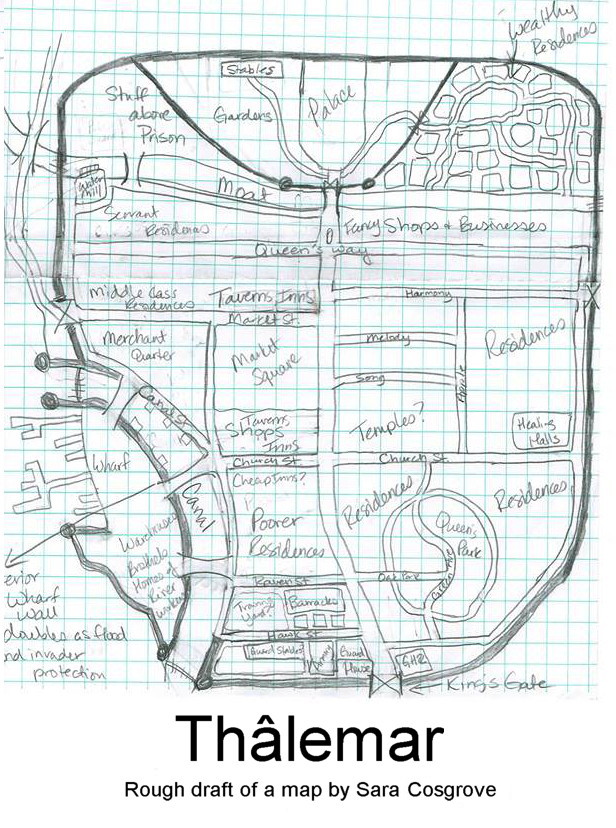
This is the rough draft of Thâlemar that my good friend Sara Cosgrove drew for me in a couple of hours today.


The differences are startling. Mine looks like a child's drawing. Hers looks like a map. Beyond that, Sara's map shows a lot more thought being put into how cities work: who would live where, what businesses would exist, how to deal with shipping and flooding and siege and...well, you get the idea. I can't tell you how pleased I am. Sara asked me a bunch of questions that made me think about details and logistics, and then drew something that answered questions I would never have thought of!

Also, I bought a personal Wiki app called Trunk Notes. The darn thing doesn't stay connected to my computer for more than a couple of minutes at a time, and the iPhone data doesn't talk to the iPad data unless I sync first one and then the other to my computer. You're supposed to be able to sync with Dropbox, but I failed to figure that out. I mean, I'm sure I could conquer it eventually, but it was far from obvious how to do it from the instructions given.

None of the formatting from the Word files I imported were carried over into the Wiki formatting, and the numbered scenes in my outline defaulted back to 1, 2, 3 at every chapter or dating break. I didn't see how to add tags (a place for them, but not an icon for adding them), and the way the links work is weird. At this moment I'm not at all sure I'll keep it. I may take another stab at OneNote or Evernote, or make do with M.S. Word.

Sara's map, though, made my day!

K.


, ,

Sunday, April 17, 2016

A Little Apocrypha

Written as a comment to a writing exercise on the Science Fiction and Fantasy Authors group on Facebook. It's based on an actual incident at Old Fort Henry when I was a small child.

Apr 02, 2016 6:44pm

"When I was about six years old," Rani said, "my mom took me to the first big Market of spring down in Mashelamar. I think she was trying to expand her clothing sales beyond Liftlabeth into the big city. It probably worked, because she has lots of clients there now." He looked at Cort. "Did you ever see her there? She used to go a couple of times a year."

"Once, I think," Cort said.

"Did you talk to her?"

"No."

Rani took a long look at his father. Cort seemed disinclined to elaborate, so Rani continued his story. "Anyway, this one time, she took me with her. And I lagged behind, looking at a stall full of pinwheels and tops and wooden horses. Then I realized I was alone, and I ran to catch up. There was a pale woman up ahead in a blue dress, and I thought it was Mom, so I ran up behind her and asked if she'd buy me a toy. Then she turned around."

"And it wasn't her," Cort guessed.

"Not only that, but she spoke to me in some language I didn't recognize. Maybe Parsai. That's when I started to get scared."

"Did the woman help you find Rithe again?"

Rani shook his head. "No. It was a man who helped me."

"Why are you telling us this story, Rani?" Meligor asked.

"Because of the man. He was dark like, like both of you when you look human, like me when I was human. He took my hand, and bought me a pinwheel to stop my crying, and then he helped me find the right woman in a blue dress. 'Run to her,' he said, so I did. When I looked back, the man was gone."

Cort nodded, but said nothing.

"It was you, wasn't it?"

Cort shrugged. 'Maybe. I've reunited a few lost children with their parents over the years. Were you one of them? I don't really know."

"Now you've reunited Rani with his father and grandfather," Meligor said. "That counts for something."

Cort shook his head. "No, I didn't. Rani did that himself."

Wednesday, March 30, 2016

Making it Real

I am determined to finish Heirs of Mâvarin this year. It's lots of fun to go over it and over it, and tinker and tinker, improving the wording and catching the occasional typo; and there are times when I add or overhaul whole scenes. The books get better and better as I do this, but there's obviously a problem. At some point, I have to concentrate on coming up with a final version of each chapter and each scene - or, at least, as final as it's going to get before being turned over to an agent or editor, one last time. Leonardo Da Vinci wrong, "Art is never finished, only abandoned." I really believe that. At some point a piece of art needs to be pushed out into the world and abandoned, to be discovered by others.

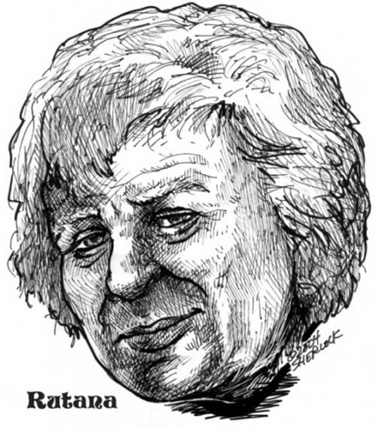
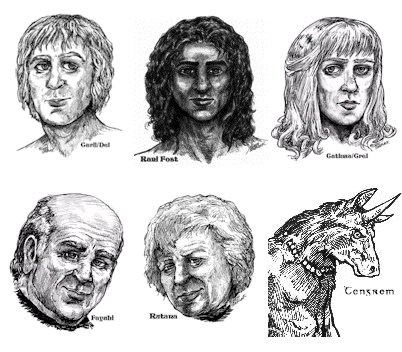
RutanaBut I'm not quite there yet. There are still a few scenes to be written, a few improvements to be made. For example, in re-reading a Patricia C. Wrede novel last week, I realized that not one character in the Mâvarin books, aside from the people in the Palace, has even one servant. Is that realistic for my society at this stage in its history? It's true that I've more or less consciously created a milieu that was far more egalitarian than most historical, pseudo-historical and fantasy realms. Have I overdone it? Probably. Certainly Rutana, an elderly mage in uncertain health who lives alone in a fair-sized house, needs and deserves a servant to help her out, at least a few days a week. She'll get one. And here's a related point. Can she afford a servant? What does she do for a living? If she's retired, where did she make her money before that? So I've had to figure that out, not just for Rutana but for Fayubi as well. Robert Young's character in Father Knows Best rather famously had no apparent job or source of income. I don't want that sort of stumbling block in the way of my books' verisimilitude.

Another current project is to figure out the geography of Mâvarin's capital city, Thâlemar. I had about five named streets, but only a vague idea where they were in relation to major landmarks and to each other. I'm no mapmaker, but I will have to make a map. And just tonight I finally decided the name of Rutana's street, and Fayubi's street, and the Ramets' street.

What's the point of all this? It goes back to worldbuilding, and Damon Knight's comment to me, many years ago now, that he had the impression that my world "ends ten feet from the road." I've come a long way since then, but I have just a little farther to go, I think. Once you know that Rutana's housekeeper Etha leaves Harmony Street just before noon each Market Day to buy Rutana's groceries, including fresh apples in season and Derion chocolate whenever possible, the world becomes that much more real. I hope so, anyway!

Karen

Wednesday, August 05, 2015

I'm on Book Three of my supposedly final edit / rewrite of Heirs of Mâvarin. Currently the plan is to put Heirs out as a trilogy of ebooks. In the years I've been toiling away on my first novel (or distracted and not working on it), the publishing industry has changed drastically. A part of me still wants to see it in a bookstore, with the Ace or DAW or some other major imprint on it, but market forces and the economics of publishing these days offer pretty strong arguments for self-publishing. We'll see.


I started a "fan" page for the books on Facebook. Yes, it's way too soon, but I want to have some content built up for when the time comes to really start promoting these books. Get a sneak preview at https://www.facebook.com/mavarininfo.

Here's a snippet from Chapter One of Heirs of Mâvarin, Book One: The River's Edge:


Rani Fost set down the belt he was embossing and slipped out the front door of the deserted leather shop. Del was already in the stable yard next door, shading his eyes and staring in the direction of the river. He pointed. “There!”
Houses and trees blocked much of their view, but Rani spotted two riders, a man and a woman, barely keeping their seats as their horses neighed and plunged in fear of the large, dark creature that pranced in the middle of the normally quiet street near the lumber yard. Other hunters milled around the creature. 
It was the monster from Rani’s dreams, the one he had been desperate to catch a glimpse of in his waking life for the past three days. At first glance the tengrem could have been another horse and rider; but there was no saddle. Instead of a rider, the equine back sprouted a furry torso, like a bear on its hind legs. Two long, hairy arms ended in pink-clawed, five-fingered hands. The dirty yellow horn in the forehead was long and slightly curved.
The tengrem opened its wolf-like snout, revealing teeth so large that Rani could see them even at this distance. A moment later it spouted fire as a hunter ventured too close to the tossing head. The hunter’s horse shied as flame touched its legs. 
The tengrem bolted for the woods that covered the hills at the village’s edge. The hunters shouted and plunged in after it. Rani and Del watched for a few moments longer, but saw no more of the quarry or its pursuers.
K.

Friday, June 19, 2015

(Just Like) Starting Over

Gee, has it been so long? It's been nearly four years since I last wrote on this blog, positing an experimental reorganization of the trilogy Mages of Mâvarin. I gave up on that particular idea after about a week.

Since then, all my blogs have fallen by the wayside, my social media presence has mostly been on Facebook, and much of my writing has been non-fiction as the newsletter editor and social media consultant (and bookkeeper, photographer, etc.) for St. Michael and All Angels Church. But just over a year ago, I joined a writing group, hoping to jumpstart my fiction writing again. If you live in or around Tucson and write sf or fantasy, feel free to join us:

Tucson SF/F Writer's Meetup

In the past year, I've gone back to the first novel, Heirs of Mâvarin, and revised the heck out of it. Now it's a trilogy of short novels instead of one really long one. The idea is that this configuration is easier to market than the longer first novel, especially if it ends up as an ebook.

To do that, though, I needed to restructure the first book in the trilogy. It was fine as the first third of a book, but it lacked the proper dramatic structure for a stand-alone novel. So a major character, who originally learned something important a hundred pages in, has to figure it out toward the end of the volume. Another character has to escape from a place, while the first character has to escape into a different place. Overall I think it's gone well, and I have the meetup group to thank for the motivation and feedback. Thanks, you guys!

The book's new opening is as follows:

Rani Fost set down the belt he was embossing and slipped out the front door of the deserted leather shop. Del was already in the stable yard next door, shading his eyes and staring in the direction of the river. He pointed. “There!” 
Houses and trees blocked much of their view, but Rani spotted two riders, a man and a woman, barely keeping their seats as their horses neighed and plunged in fear of the large, dark creature that pranced in the middle of the normally quiet street near the lumber yard. Other hunters milled around, apparently trying to surround the creature. 
It was the monster from Rani’s dreams, the one he had been desperate to catch a glimpse of in his waking life for the past three days. At first glance the tengrem could have been another horse and rider; but there was no saddle. Instead of a rider, the equine back sprouted a furry torso, like a bear on its hind legs. Two long, hairy arms ended in pink-clawed, five-fingered hands. The dirty yellow horn in the forehead was long and slightly curved. 
The tengrem opened its wolf-like snout, revealing teeth so large that Rani could see them even at this distance. A moment later it spouted fire as a hunter ventured too close to the tossing head. The hunter’s horse shied as flame touched its legs.  
The tengrem bolted for the woods that covered the hills at the village’s edge. The hunters shouted and plunged in after it. Rani and Del watched for a few moments longer, but saw no more of the quarry or its pursuers.

The Clarion Write-a-Thon starts in two days, and I'm thinking of participating. This fundraiser for the workshop, where I first met my husband of 36 years, runs from June 21 to August 1, the same dates as this year's workshop. (I'm pretty sure that my Clarion started on July 3rd, 1977.) Their website explains the What and How of it:

Welcome to Clarion UCSD's Sixth Annual Write-a-Thon! What is a write-a-thon, anyway? Think charity walk-a-thon. In a walk-a-thon, volunteers walk as far as they can in return for pledges from sponsors who make donations, usually based on the number of miles the volunteer walks. Our Write-a-Thon works like that too, but instead of walking, our volunteers write with a goal in mind. Their sponsors make donations to Clarion sometimes based on number of words written, sometimes based on other goals, or just to show support for the writer and Clarion.
All donations are made through The Clarion Foundation, a 501(c)(3) non-profit organization.
As I embark on my revision of Book Two of Heirs, should I make it a Write-a-Thon project? If I do, will you sponsor me? Better yet, will you join me?

Update: I signed up.

Wednesday, September 14, 2011

The New Paradigm Mâvarin Novels

I had an awesome idea today for revamping my unsold fantasy trilogy, Mages of Mâvarin. I’m very excited about it.

(Please note: This was originally posted on Tumblr, where it will mostly be seen by Doctor Who fans who have no idea what Mâvarin even is. (It’s a fantasy country in an alternate universe, geographically located in the eastern U.S.) But the Tumblr entry will be picked up by Twitter and Facebook, and here I am reposting on Blogger, which will also hit FB. So much duplication, and maybe two or three people will end up reading it. But it’s worth it.)

Anyway, here’s the background. I recently finished editing my first novel, Heirs of Mâvarin, and am gearing up to submit to agents and publishers. Meanwhile, I recently reread the sequel, Mages of Mâvarin, cut one scene and added another, and called it done except for tweaking. The difficulty with Mages is that it’s over 300k words long, long enough to be a trilogy. So years ago I broke it into three volumes, with vague stopping places in the overall narrative, sort of like Tolkien did with The Lord of the Rings. An Adept in Mâvarin would set up the several plotlines, Another Mâvarin would get Our Heroes in even worse trouble, and Return to Mâvarin would complicate things further and then resolve all the plotlines, more or less.

I want my bookshelf to look like this!

But here’s the idea I had today. Instead of breaking Mages chronologically, with none of the volumes truly complete as novels, what if I made the three books concurrent? The first book would cover Rani and Darsuma’s storylines, the second would be about Fayubi, Fabi and Temet, and the third would focus on Li and Prince Talber. Each novel would begin on the same day, and each would end on the same day, and some events would be retold from different points of view, as Moorcock did with Corum, Hawkmoon etc. This way, each book tells the whole story of what happened to those particular characters, and stands alone as a complete novel. At the same time, each novel provides context for the other two.

This will be a really interesting writing exercise, and may even make the books more marketable. Here I go, starting right now! Hooray!

But yes, I’ll be submitting Heirs in the meantime.

Karen

Monday, June 27, 2011

Summary to Scene, Sort of

I had a scene in what is now Chapter 29 of Heirs that until tonight was not technically a scene at all, but all summary. You know the bits in which Tolkien or Rowling or whoever disposes of days or weeks of story time in a few paragraphs? This was one of those. But without a bit of actual scene to anchor it, the description of Li's behavior during this period was all tell, no show. This deficiency has been bothering me for years.

Tonight I at least got a line of dialogue in, and a few specific actions to make the beginning of the passage into an actual scene:

“Early again, Li?” Teri Dibel asked.
Li nodded, but did not bother to answer as he hurried to Captain Perton’s office. The first day after his arrest and release, Li had managed to grovel his way onto a City patrol. ’Nishmû willing, he might win a similar assignment today, but only if there was still room on the roster. Otherwise he would try for Gate duty on one of the exit lines. Sooner or later, the traitor girl would either meet with dissidents or try to leave the City. When she did, Li was determined to be the one to capture her, abating his earlier mistake.
Once inside the Wall, he looked over Captain Perton’s shoulder at the half-completed roster, and his spirits rose. Perton had put him in charge of six trained Rovers, on patrol through the merchant district. Li accepted the undeserved honor with a smile and a heartfelt salute. Perton grumpily waved him off, sending him on his way

Not the best bit in the book by any means, but it's much less clunky than it was.

K.

Sunday, June 26, 2011

What I'm Editing Tonight - a Clarion Write-a-Thon Extra

This poor blog has lain fallow to two years or longer. Its most recent entry before this was an ill-conceived fragment that I was embarrassed to see listed on my sidebar. Well, no longer. During the Clarion Write-a-Thon, which started today, I will be posting fragments from whatever I'm working on, and possibly other Mâvarin bits and pieces. For tonight, I just want to show you the update of the same fragment that's on my Clarion Write-a-Thon pag:

Li said nothing further, and without meaning to, Crel let herself be drawn back into the book’s narrative. 
After a while, she realized that Li was still in the doorway, watching her. “I’m sorry. Was there something else you wanted?” she said.
“Well, yes, but I can come back later. I didn’t mean to be rude.” 
“I’m sorry,” Crel said again. “I’m the one who’s being rude. It’s just that I haven’t read this particular legend before.” 
“I get that way about books, too,” Li said. “Do you ever get the feeling, right after you read something, that the whole world around you is a little different because of what you read?” 
Crel thought about it and nodded. “Sometimes, after I’m lost in a book, everything I experience seems to mean a little more, as if it were part of the story. Yes, I’ve felt that.” 
“Then the feeling wears off,” Li said, “and everything’s just the same.” 
Crel looked at him again. She knew just what Li meant. She’d felt it herself, but she had never been able to talk to anyone about it. Not to Del, and certainly not to Jamek. 
“Somebody told me a story a few days ago,” Crel said slowly. “It changed the world around me, and I don’t think the effect is ever going to wear off.”

I've just finished Chapter 29, which I renamed, and I'm up to page 444. I'm going to bed now. Good night!

Monday, January 12, 2009

Flip Rate: A Beginning

This one is in reaction to another dream. it's based on a series of books I enjoyed up to the point represented by the dream, and found problematic thereafter. The remarkable thing about that is, as far as I know, those books don't exist, but are the product of some previous dream.

This is a fragment, of course, but I hope I can make it coherent enough to stand as a short story, or possibly the beginning of yet another serial.


Berelandra
Fragments from a Possible Work in Progress

by Karen Funk Blocher
© 2009 by KFB

Chapter One: Flip Rate

Part One

There was nothing strange about the girl. That much was certain. She was a perfectly ordinary human being, young and healthy.

I should know. I examined her, and I'm a doctor. Or was.

Oh, her circumstances were odd, no question about that. She was an orphan, apparently about twelve years old, living alone in a small, abandoned hotel along the Bering Strait. There had been an older brother, apparently, but Cinda was annoyingly vague about where he had gone or what had happened to him. "I didn't follow him. I was afraid," was all she would say at first.

And the hotel itself didn't make much sense. Who would want to vacation up here, far from the cities and amenities, along a stretch of sea the cruise lines could not enter without going aground? There wasn't even that much wildlife here, just a handful of auks and puffins, and the occasional polar bear lazing around on still-firm ice. Their habitat troubles were a hundred miles further south, and the survivors of global warming had not yet reached this godforsaken place. So there was no reason for a hotel to exist up here, run by an English girl almost certainly unknown by the State of Alaska's child welfare people. There was no village or town for fifty miles in any direction, no road to anywhere, no possible clientele except a small party of scientists studying the geological, archeological, ecological and meteorological evidence for the one time existence of a land bridge here. Which of course was what we were.

Six days of helicopter surveys with infrared cameras, landing on a likely spot and chipping away at samples of permafrost had let us to this luxury log cabin, the sort of thing Frank Lloyd Wright might have designed. Its graciously open interior spaces made clever use of glass and wooden curtains to bring in the heat and keep out the cold in a way I didn't quite understand. But I liked it.

The kitchen wasn't as rustic as it looked, and it seemed well stocked. Cinda was at the stove, flipping pancakes for us. Her flip rate was remarkable. Each pancake was perfectly cooked through in just about a minute.

I was rather pleased with myself for thinking up the term "flip rate," as if it mattered how quickly one could change pancakes from pools of batter into nicely browned discs. Funny, that.

When our expedition leader, Eric, asked where the food came from, Cinda said, "Oh, Jerry drops it off, once a week."

Jerry was the helicopter pilot who had brought us here. He was supposed to return on Friday. This was Tuesday.

"How do you pay for the food?" Eric persisted.

"Oh, with these." Cinda wiped her hands off on a towel and walked to a locked safe next to a glass-covered cupboard. After a few rapid twists of the dial she reached in and pulled out several shiny lumps of yellow rock.

"But this is gold," Vince, our geologist, exclaimed. "Unprocessed gold, like what came out of the Yukon Gold Rush over a century ago. What is it doing here?"

"Oh, it's been here a long time, my whole life," Cinda said. Everything she said seemed to start with "Oh," as if every thought our questions precipitated was entirely new to her.

"How much of it is there," Eric asked. "If you've been spending it on food and supplies...."

"Oh, I don't think I should tell you how much," she said, "but enough to last a while longer. Years, maybe. It's worth it to be able to stay here." She put the gold away, carefully spinning the lock afterward.

"Why do you want to stay?" Vince asked.

"In case Jack returns," she said. This was clearly not a new thought for her. Jack was her brother. We had determined that much.

After breakfast, Cinda showed us a framed photo of her family. It was black and white, and looked like something out of the 1950s or earlier. Everyone wore fur, in the style of a previous generation, and grinned at the camera as if in acknowledgment of a game of dress-up.

"This is my mom, Beryl," Cinda said, "and here's my dad, Erasmus. That's Jack, and this is me."

"What happened to your parents?" asked Lucy, the team's cartographer.

"They went out on the ice, a long time ago," Cinda said. "They never came back. Later Jack went looking for them. He never came back either, but I've seen him. Several times. He wants me to go out there with him, but I won't do it."

At this point I suspected that Cinda was somewhat delusional, but she was so matter of fact about everything that I wasn't certain.

"Why did your family come here in the first place?" I asked.

"Oh, they were looking for a place to have the baby. Me, I mean. I guess the sled dogs were lost or something. Then they found this hotel, and the sign, and figured this was the place to stop."

"The sign? What sign?" The only sign we had seen was the hotel name, World's End. Weird, maybe, but hardly an omen.

"Oh, do you want to see it?"


She led us outside, to a bed of ice immediately behind the hotel. The summer sun made it almost blinding, except for deep blue shadows, well beneath the surface. The numbers and letters they formed were so precise they could have been etched by lasers: "1929 BERE 2009."

"You see it?" she asked.

"We see it, but we don't understand," Eric said. "Why would that influence your parents to settle here?"

"Well, it's my family's initials," she explained.

"No it isn't," Vince said. "That would be B E J C."

"Oh, well, that's because of the nicknames. Jack is really Richard, but he didn't like that name, and Call of the Wild was his favorite book. So he's Jack. And my real name is Ella. Get it? Cinda Ella?"

I suppressed the groan that escaped the lips of several of my colleagues.

"What do the numbers mean?" I asked.

"Oh, they're years. The year my family first got here, and this year. The year I leave, maybe."

"You think we won't let you stay?" Eric asked.

Something in the sky changed. Blue became another color, gold maybe, like Cinda's nuggets. Something flashed in her eyes, and she shook her head. "I don't think it matters. The sky has changed, and I don't have to wait here any more. I think we're all leaving now. You're the people I need to help me."

"Help you do what?" Lucy asked.

"Go help Jack," she said.

That's when the flipping began.


To be continued. Maybe.

Wednesday, December 17, 2008

Nightmare University

A dream, half-remembered. I hoped to build something more of this than I managed to retain, but ah, well. At least it sets a mood.


Nightmare University

by Karen Funk Blocher
© 2008


An alien who wanted to go Christmas shopping found himself trapped in a complex of academic buildings after dark, looking for a way out onto Route 39.

He walked down gloomy, formerly white corridors where students passed by, discussing coffee and homework. Muffled music came from behind a locked metal door painted orange, but when he opened it he found it was just the soundtrack to King of Hearts, flickering in an almost empty room.

He walked through the athletic apartment, where students in yellow T-shirts spoke enthusiastically about their several undefined sports. One female student said something rather interesting, and was answered with something rather profound. In the next room, two other students said exactly the same things. In the room after that, the alien could not remember what either couple had said.

He walked on into the law department, where he found a statue of an eagle, labeled American Plausibilitism. "Ah, that explains everything," he said. And woke up.

A slightly more coherent version, starring the Doctor and turned into a comic strip slide show, can be found on my LiveJournal.

Karen

Sunday, December 07, 2008

Former Ficlets: An Archive

Like pretty much every other bit of user-generated content AOL ever hosted, Ficlets will be gone by year's end. This was a site devoted to ridiculously short fiction, limited not by word count but by character count. Stories could then be given a more normal length by writing a series of prequels and sequels - and Ficlets writers were encouraged to do this to each other's stories. To be honest, I really didn't like that part, because other writers took my characters in the "wrong" directions in their sequels.

Despite the fact that a glitch prevented me from logging on with the OpenID I used for my Ficlets, I was able to find them eventually and store them to Word. Here are three of the five pices I wrote for that site. The other two I will post later, fleshing them out into a proper story. New fiction on this site at last - what a concept!


Do You Want to Meet a Pirate?
by Karen Funk Blocher
© 2007 by KFB; published on March 23, 2007.


“Tell me a story,” the little girl demanded.

“What kind of story?”

“About pirates.”

“Do you like pirates?”

“Yup. Only I don’t know any.”

“Would you like to meet a pirate? Or would you rather just hear a story about one?”

“There aren’t any more pirates.”

“Yes there are. I know some pirates. One in particular.”

“A real pirate? With a ship and everything? Or do you mean the boring kind, that just copies video and sells it?”

“The kind with a ship and everything.”

“I don’t believe you. What’s the name of the ship?”

“Bad Wolf.”

“That’s a funny name for a ship. There aren’t any wolves in the ocean.”

“You’ve never heard of the Sea Wolf?”

“No. Can I meet him?”

“Her. That depends. Are you brave enough?”

“Yeah. Why? What will she do to me?”

“She might shanghai you.”

“What’s that mean?”

“Make you part of her crew.”

“That would be cool.”

“You couldn’t go home for a long time. No mommy or daddy.”

“That’s okay.”

“No tv. No iPod, phone or video game.”

“Well….”

“No computer.”

“I’ll think about it.”


The Secret Freeway
by Karen Funk Blocher
© 2007 by KFB; published on March 26, 2007.

(This one is based on a concept I've been playing with for decades - and I
still don't know what to do with it.)

I first discovered the secret freeway in 1986, the same year I learned that the back doors of every Yellow Roof restaurant lead into the same parking lot.

This is how it started.

It was a little over 4 AM when I pulled into the “Yeller’s” at El Cajon, California. It had been our traditional stop, the place to get breakfast en route from the Cleveland National Forest rest area to Disneyland. But everything was different this time. Jill wasn’t with me, and never would be again. I wasn’t headed for Disneyland, and it wasn’t time for breakfast.

I needed coffee, so I stopped anyway. It didn’t help much. I hit I-8 again eastbound, thinking that if I could just make it to the Cleveland rest area, I could sleep there. It was pretty much all I thought about.

An hour later, I pulled off. It wasn’t until I’d parked that I noticed the snow, neatly plowed but starting to drift in the biting wind.

And the Ohio plates on most of the cars. And the I-90 sign.

I was ten miles from Cleveland, OH, via the secret freeway.


What It's All About
by Karen Funk Blocher
© 2007 by KFB; published on June 04, 2007.


“What is it about?”

“It’s about how we change in response to outside pressures.”

“Boring. What is it about?”

“It’s about three teenagers trying to stay alive.”

“Better.”

“This isn’t helping.”

“Let me see the manuscript.”

The next day: “It wasn’t about that at all.”

“What?”

“It’s not about people changing, or trying to stay alive. That’s incidental. It’s about alienation, Fox News, and the corruption of the Bush White House. Allegorically, of course.”

“No, it isn’t. Okay, the one character is alienated, but that’s about it.”

“Wrong. His friends are alienated, too, from their family and friends and a corrupt government. The government lies to the people, aided by the mass media.”

“There are no mass media in the story. It’s a fantasy world.”

“Your storyteller characters are the media. They are complicit in the government’s lies.”

“But I wrote that part before Bush took office.”

“Doesn’t matter. It’s all right there in the story.” He looked at me kindly.

“Writers never know what the story is about.”

Monday, September 01, 2008

Rani and Karen - Together Again for the First Time


So are you done?
Rani asks.

I'm a bit surprised. Unlike Ariel and Kate, none of the Mâvarin characters have ever spoken to me before. But if there's one person from Mâvarin who would find a way to communicate with a world in which he exists only as words and pictures and a 34-year obsession, it's Rani. He's not here. I don't see him. But his words are alive in my mind, and after a moment I answer.

"Done?"

With your book. Have you settled on every word I say, killed all the clichés, made everything make sense? Are you done?

"I think so."

But you're not sure, are you?

"Pretty sure. I've tweaked that one bit with Barselti, and I've reached the end, and gotten the final word count."

And you're still worried that the dialogue with King Jor at the end is too pat, and you're tempted to go through the book once more, from the beginning. Well, don't.

"What if there's still stuff wrong, and I can fix it?"

What if you let your own insecurities keep you from marketing and selling your life's work, ever? It will never be perfect, because your subjective opinion will never let that happen.

"But is it good enough for a YA publisher?

How should I know? I'm a tengrem and a mage adept, not a literary agent. But I do know something about insecurity. You need to get over it.

"It shows, huh?"

Inside your head it's very clear.

"If you're inside my head, does that mean you know everything that's in the book?"

I know it's about us. The so-called Heroes of the Restoration. And I know which bits of it worry you. Why?

"Can you tell me if I got everything right?"

No.

"Why not?"

First of all, I don't have the time or patience. Second, it doesn't matter whether your book matches my life exactly. Maybe it matches some other Rani's life. Or maybe I was drawn into your head because the match is exact, but it still doesn't matter. It only matters whether it's a good book, and I can't help you with that. And finally, what makes you think the version of me taking in your head is any more real than the one on the page?

"So that's it? You're just here to badger me to stop tinkering and submit it?"

Pretty much. I was also curious about you.

"About me? Why?"

I dreamed someone was writing about us, and it wasn't someone from around here. I wondered why someone from another reality would know about us, or care. Now I know.

"What do you know?"

You just happened to latch onto events from a reality so far away that you can only deal with it as fiction. It's like Fayubi and his visions.

"Only less useful."

If you sell the books, it was worth it. So get to it.

"I'll try."

No. Don't just try. Do it.

"I hate when people say things like that."

I hear Rani's laughter in my mind. Yes, I know.

Heirs of Mâvarin: done and edited. The other books are ongoing. My next step, I decide, is to start researching the YA market, and get it out there.

Good, Rani tells me, and is gone.

Karen

Monday, December 03, 2007

Rani in the Tree: A Fragment

This is the scene I just cut from Heirs of Mâvarin. Enjoy. I still love the scene, which helps to establish Rani's character, the reasons for the hunt and the wayward tengrem's state of mind. But it delays Rani's confrontation with the tengrem for several pages, and almost everything here is accomplished by something else somewhere. Therefore it has to go. I think. This scene actually appears in the chapter as posted on this blog a year or two ago, but has probably changed a bit since then.

"Later This Somewhere" will be back in a week or so.--KFB


Cut from Heirs of Mâvarin
Chapter One: The Tengrem
by Karen Funk Blocher

A short while after Bil and the blacksmith passed beneath Rani’s tree, he again heard the clop of hooves from upstream, and tensed. Was it a tengrem, or a hunter on horseback?

As the sound grew louder, Rani strained to listen, and then relaxed. There were two sets of equine legs coming, and human voices hung in the air. In a moment another pair of villagers emerged from the woods onto the River Road. Like the first pair, they were arguing. The argument ran along much the same lines as that of Bil and Jord, but without the sister.

This time, as the hunters passed under his tree, Rani called out to them. “Ho, there!”

The two horsemen reined in quickly at the unexpected greeting. Then one of them looked up, searching out Rani on his high branch. “There you are! You shouldn’t startle a man like that! You’re Rithe Fost’s boy, aren’t you?”

Rani frowned at the word “boy,” but replied with dignity. “Yes, I’m Rani Fost,” he said. “I—I was wondering how the hunt is going.”

“Why aren’t you with the hunters?” Clif Wipan asked. “Then you’d know what’s happening.”
“Hush, Clif,” Suri Pelch said. “I expect the lad’s only trying to respect Rithe’s wishes. Such a nervous woman! Meaning no offense, young Rani.”

“That’s all right,” Rani said. “It’s true. She is.”

“Anyway,” Suri continued, “It’s not going well, not at all. I’ve never seen an animal as fast as that tengrem. We keep losing it, only to see it again as it circles back.”

“We think the tengrem is between here and the village,” Clif added, “so we’ve split up into pairs to try to surround it.”

“It hasn’t been on the road here,” Rani said. “Not in the last half hour, anyway.”

“I’m not surprised,” Suri said sourly. “It’s probably chasing my sheep while we’re all busy tromping around in the woods.”

“I’m sure that’s all the tengrem wants,” Clif said sarcastically. “It’s not trying to save the kingdom or start a kingdom or kill the mages or marry its pale queen, or any of that other contradictory nonsense it told us this morning. No, it came all the way north just to gobble your sheep.”

“The tengrem said all that?” Rani asked.

“All that and more, when we first confronted it,” Suri said. “None of it made the least bit of sense.”

“That’s right,” Clif said. “Then when we attacked, it pretty much stopped talking.”

“Pretty much,” Suri agreed. “I thought I heard a few words, but most of what came out of its mouth after that was growls and smoke.”

“And flame,” Clif said. He grinned. “Maybe it was getting ready to barbecue a few lambs.”

“Laugh if you like,” Suri Pelch said, “but I’m going to check on my flock. Are you coming, Clif?”

“We can take a quick look at your sheep as we’re circling around,” Clif answered, “but only because it’s on our way. Be careful in that tree, Rani. The tengrem could be anywhere. We don’t want you falling off the branch and into the monster’s jaws.”

“I’ll be careful,” Rani said. As if that could happen! He had never fallen out of a tree, even as a little boy.

Suri and the miller rode on, leaving the River Road just before the bend to take the path that led to the Pelch farm. Rani settled down for another wait.

****

Revised version:

A short while after Bil and the blacksmith passed beneath Rani’s tree, he again heard the clop of hooves from upstream, and tensed. Was it a tengrem, or a hunter on horseback? Rani strained to listen, and then relaxed. There were two sets of equine legs coming, and human voices hung in the air. In a moment another pair of villagers emerged from the woods onto the River Road. Like the first pair, they were arguing. Rani spoke with them briefly, but Clif and Suri had little news to offer. Rani settled down for another wait, hoping that the next horse he heard would carry his friend Shela. Whenever anything interesting happened in or around Liftlabeth, the selmûn Wanderer was inevitably involved.

Monday, November 12, 2007

Later This Somewhere, Part Three

Here we are with Part Three at last. Part Two is three entries down, and Part One just below that. As promised, I've enlisted a collaborator for this project. Please welcome Sarah Kishler, a hoopy frood from way back, whom I've met in person exactly once. She has at least a hundred times more theater experience than I have (I was in one of my mom's shows in 1965), so she's definitely the go-to person for this story. Knowing how defensive I can get about my fiction, I was more than a little nervous about collaborating -- but so far, so good. Thanks, Sarah!- KFB

The Jace Letters 2: Later This Somewhere

by Karen Funk Blocher and Sarah Kishler
© 2007 by KFB & SK


Part Three


Subject: Re: That Impossible Theatre
Date: 7/6/2013, 4:23:573122 AM
From: NotaBeach
To: JaceFace


Dear Jace,

Well, of course I went back, at night this time. The box office for the theatre – it’s called the Jubilee Palace – is hidden away in a close, sort of a cross between a courtyard and a cul-de-sac. I only noticed it the first time because I saw a couple in evening clothes walking in that direction. This time I walked past it twice before I found my way in. Even then, they didn’t want to sell me a ticket!

“I'm sorry, but the play is sold out,” the man in the booth said.

I looked around. The theatre looked pretty much deserted. “How about tomorrow night?” I asked.

“Different play, and that's sold out, too,” he said. “We're sold out all this week.”

“Look, is there a reason you don't want to sell me a ticket?”

A woman entered the box office through a back door. “Let her buy a ticket,” she said, and flashed me a brief smile. “She's all right. We sold her one last week.”

“But why, Carly? What makes you think she's all right?”

“She's got the Look,” Carly said. “She's one of us.”

The guy at the counter didn't answer directly. He turned to me and gave me a long, searching look. “One for tonight, then?” he asked. “It's Brigadoon.”

“That will be fine,” I said. “What’s on tomorrow night?”

Man of La Mancha.”

“Great. I’ll take one for tonight, one for tomorrow night, if that’s okay.”

The man glanced back at Carly, who nodded. The tickets were forty pounds each, and I’m not rich, but I handed over the money without regret. How could I not?

And it was worth it.

To answer your question, the theater was packed to standing room only capacity. The usher showed me to my seat in the second row of mezzanine. I actually had a great view! Don't ask me how I lucked into that when I bought my ticket at the last minute.

As far as the audience went, I didn't notice anything unusual about how they were dressed. They seemed to have more expensive clothes than I do, but that's no shock. I do remember reading somewhere that people don't really dress up for the London theater, though, so maybe that is a little odd. I guess I haven't been to enough “normal” performances in the West End to know.

Do you know who played the leads in Brigadoon? Of course you don’t, but you may recognize the names when I tell you. You may have even seen Robert Goulet on television when you were younger. He played Tommy, and he looked about thirty years old.. He’s not my favorite actor, but it’s remarkable that he was there at all, considering he’s been dead for six years. I scanned the program for any other names I might have recognized, but I only knew his, so I figured he was the only “big name” brought in for this one.

I couldn't have been more wrong. You should have heard the collective gasp of the audience on Fiona's first appearance– and then the applause that followed lasted for minutes. Goulet had gotten applause too, but this dwarfed his, in volume and duration. Everyone in the audience seem to be so surprised and delighted to see this actress that they had a difficult time settling back down so the show could go on. Of course, I was sure I was the only one there who hadn't a clue who she was. I looked in my program again and only saw the initials “SB,” which didn't mean a thing to me. I supposed she could have been someone very famous in the UK but not in the States.

It was only after the applause for “The Heather of the Hill” subsided that I worked up the courage to turn the woman next to me and ask who it was. She looked at me as if I had horns coming out of my head. “You need an introduction to the Divine Sarah?”

“Thank you,” I said, afraid that saying anything more would cause me to get kicked out of the theater or something equally terrible. But that was enough for me to puzzle it out. That was Sarah Bernhardt! I don’t know much about her career myself, but I understand she was the most famous actress of the 19th century. Her singing as Fiona wasn’t the best, but she gave the part real depth and feeling. And it gave me a clue into the nature of the audience, too – to instantly recognize a stage star who's been dead for almost a century? Clearly, these people are serious about this stuff.

I’ve been thinking today about having “the Look,” as Carly put it. I think it must be something to do with my having been in the time bubble. She can detect it somehow. Have you any thoughts on what there might be about me that a time traveler could actually see, and how they might see it? Whatever it is, I’m grateful. They’re obviously very secretive and security conscious about what they’re doing, trying to serve a very select clientele without the general public finding out about this strange theatre troupe and its anachronistic casts.

Tonight is Man of La Mancha, which I’ve loved ever since seeing the Quantum Leap episode about it. I didn’t much care for the film, though. I’m looking forward to seeing who they get for the lead roles in that one.

Beyond that, I really want to get to know more about this whole setup. Who is doing all this, and how and why? Do the actors know they’re working in 2013, with other players similarly out of their time? Are they living in 2013 for the duration, or going home after each performance? How do people get back and forth? I know we’re not supposed to discuss how you got me out of the time bubble alive in my past, your future, but knowing what these people do might help you with your research. Or am I wrong about that? In any case it must be a logistical and financial nightmare, organizing all these people from different eras, mounting full productions and still keeping the rest of London from noticing anything unusual. But I’ve noticed. I’m really glad about that! And as for David's autograph – I don't know if actors come back for repeat performances, but if he does – it's a plan!

Sandy

Saturday, October 20, 2007

Beneath the Orange Sky

I'll get back to the other stuff eventually, but meanwhile here's a special treat, cross-posted from the Outpost. With closure, even!

Into the Land of Shadows

Vicki of the blog "Maraca" is responsible for this week's Round Robin topic, "Shadowland." This is going to be my most ambitious RR entry to date, not so much photographically as, well, you'll see.


Beneath the Orange Sky
by Karen Funk Blocher


They rode toward the mountain side by side, Rona Sable on her horse, Apple, her grandfather Seth on Chub as usual. The oncoming sunset did not pause in its approach, unlike several of the cars that passed them, heading toward the city as the two horses left it behind. While they were still on the long, flat highway, Seth played his favorite game with Rona, asking her questions about stars and planets, brains and botany. Rona answered dutifully, but she was not in the mood for it. Her whole body throbbed with tension, not just from the long ride, but with anticipation. She looked no more than seven years old, but today was her thirteenth birthday. Tonight after sunset, her impossibly youthful grandfather would finally tell Rona the secrets that had been withheld from her, all her life up to now.


Once they reached the base of the mountain, Seth lapsed into silence. They directed the horses carefully along the narrow shoulder, lest they miss their footing in the gloom. Ten feet to the right, the drop was at least a hundred feet, and increasing with every step.


"How far are we going?" Rona asked after a while. "This is getting dangerous."

Her grandfather did not answer immediately. Then he said, "Yes, it is. But for now we're riding only as far as the first vista point, another three miles or so."


Sunset was starting to fade as they turned right onto the looping drive of the Frog Mountain vista. A couple sat on the wall between the paved parking and the drop toward the valley below. Rona knew her grandfather would not want to tell her anything interesting with strangers around, so she wandered along the stone wall, taking pictures with her new camera.

"Point the lens this way," Seth said in her ear.


Rona aimed her camera in the direction her grandfather had indicated, over the wall onto a path that went past of couple of mature saguaros. Beyond the cactus, and over the foothills themselves, the LCD viewfinder revealed a light in the sky, arcing over the blue, like a cloud but not a cloud. Rona glanced away from the camera, but her naked eye revealed nothing.


When she turned back, the couple were getting in their car. "Finally," her grandfather said. "Now, look that way. See the mountain over there, where there's still an orange glow? That is where we are going."

The more Rona looked, the less sense Seth's statement made to her. "From here? Tonight?"

"Yes, from here. Look, that's the way down, over by the two saguaros. Take Apple's bridle and follow me."

Rona protested even as she obeyed. "But why from here? That mountain is down beyond the airport. Half the city is between us and it. And it's getting dark."

"It won't get dark. Not quite. And now that we've passed the boundary, we're not where you think we are. There is no city, until we reach that mountain."

"But--"

"Wait and see," her grandfather said.


Five minutes later, the switchback they were following turned suddenly onto a disused section of road, where no road ought to be. Below was a flare of light, but it was not a set of headlights. The sky ahead of them was more orange than before, and the ghost of a full moon was in the sky, although Rona knew it should only be a half moon. By its light and the distant orange glow, she found she could see every pebble, every bramble. The horses plodded along the dark pavement.

"Welcome to the Shadow Kingdom," her grandfather said. "While we're here it will never be daylight, but it never quite gets dark, either. "Look behind you."

Rona looked. Behind her should have been the looming mountain, but instead she saw a valley and the twinkling of lights. A yellow glow fringed the horizon, and a much brighter glow above that seemed to hold back the night. "What's that? It almost looks like, I don't know, a bomb or something."

Seth shook his head. In this strange light he looked slightly older than usual, perhaps a year older than his students at PCC. "It's the interface between the world you knew and the one we just crossed into. It's not visible from the other side, except sometimes through a camera lens, when the two worlds come together at dusk. But on this side it's the primary light source. You won't see the sun again while we're here."

"How long will that be?"

"Until you come of age."

"What does that mean? Until I'm eighteen, or twenty-one? Or worse yet, until I look twenty-one? That could take decades."

Seth smiled at her. "It won't be like that. It's the sunlight that slows down our aging in the other world. Here you will finally start to age normally. And no, we're not waiting for you to reach some arbitrary age or stature."

"What then? Am I supposed to go and prove myself in some way, so I can be admitted to some strange tribe? Or engage in ritual dreaming? Or kill a deer with a stone knife? Does this world even have any deer?"

"Mutter's Grey deer. And no, you don't have to hunt them, although some do. You're here to complete your education."

"I can't do that at home?"

"Haven't you guessed? This is your home, the land of your birth and birthright. The things you need to learn, you can only learn here. Your mother will teach you."

Rona stopped dead. "My mother?"

Seth smiled at her. "Of course."

"But isn't she dead?"

"Did anyone ever tell you that she was?"

"No, but I kind of assumed...."

"You know better than to assume things. Observe, hypothesize, and test. But in this case you don't need to. I had a message from Mana, just last week. She's looking forward to seeing you again."

"Truly?"

"Truly," Seth assured her. "Now come on. It's time we were riding again. The horses see this road as well as you can, and we've a long way to go."

Full of wonder, Rona climbed into the saddle, and rode on into the endless orange twilight.


Fin.

Sunday, October 07, 2007

The Children in the Shoebox: an Experiment

While we're waiting for the collaboration on "Later This Somewhere" to take off, here's something I'm writing off the top of my head, under the influence of E Nesbit and Miss Mullock.

The Children in the Shoebox
An Experimental Faerie Tale

by Karen Funk Blocher
© 2007 by KFB


Part One
Once upon a time there were three children who lived in a shoebox in the cupboard. Their names were Mattie, Maggie, and Maddie. I expect you think a shoebox is a very odd place for three children to live, but it was their home, and they were used to it.

The shoebox was in a cupboard, as I have said; and the cupboard was in a pantry, and the pantry was in a little stone house in a grassy clearing in the Deep Woods. The house belonged to a witch, and the Deep Woods belonged to the King, but he wasn't around much, just once a year to smile and wave and hunt the same magic deer who never let him come close to catching her. She was really a princess in disguise, and the King knew it, so he wasn't as ruthless in trying to trap her as he might otherwise have been. He kept hoping that one year the princess would get tired of being a magic deer, and let him take her home at last.

Meanwhile the King let the witch live in the woods to look after the deer and the children, who were his cousins once removed on his mother's side. They were part Faerie, enchanted to remain in the miniature form the Good Folk sometimes preferred. In this size they fit in the shoebox quite well, with three tiny beds lined with the down of baby robins, for indeed their beds had started out as a large bird's nest. The witch, who was a decent sort, really, had cleaned up the nest so that it was quite habitable and pleasant, and not at all smelly.

Every morning the faerie children would fly out of the cupboard, whose door the witch thoughtfully kept open except at night, for protection, and outside into the meadow for bath and breakfast. The little stream that ran through the clearing was shallow and only a little dangerous, as long as they stayed in the inch-deep water at the very edge. Breakfast was nectar from flowers and tiny millet-cakes the witch left out for them. They didn't actually see the witch, for she was invisible; but they usually remembered to sing out a "thank you!" to her, especially when she came up with something extra special to eat, like honey-buns or a tiny omelet.

Afternoons, the faerie children might go racing with butterflies, or make forts out of sweet grass, or visit with their friend, Princess Doris,
the deer. Doris was secretly in love with an enchanted skunk who lived in the hollow of a nearby oak tree. Years before he had behaved very badly toward the witch's sister, which is a very foolish thing to do. He was sorry about it, but not quite sorry enough yet, in the witch's estimation. So the deer waited for Prince Roger - the skunk's real name - to be sorry enough for the witch or her sister to let him go. Another year, Doris thought, or two, and he would probably be quite reformed enough for them, and for Doris as well. She probably couldn't live happily ever after with a fellow who still went around insulting witches and princesses and thought it an all right thing to do. But the children thought Roger was quite fun to be with, and usually pretended that his smell didn't bother them at all.

The one thing that bothered the children about this life was that it got to be rather dull and lonely after a while. Doris and Roger were very nearly adults, and sometimes acted more like animals than people. The witch was invisible, so if she was even around they usually didn't know it. And the King, jolly as he was, seemed a little awkward around them when he came through every spring. "It's the politics," Mattie explained one year, and Maggie nodded wisely. Maddie didn't really understand this explanation, and wasn't quite sure the other two did, either. But she didn't say so.

The fact remained, however, that the three faerie children suffered, just a little, for lack or a mother or father or playmates aside from each other. Then one day, everything changed.

Well, really, only one thing changed, but it was a very important change. Someone new came into the Deep Woods.

Maddie saw the girl first, in the second clearing over from the stone cottage, on the left. She was sitting on a rock, dressed in a frock the exact color of buttercups. She was reading a large, thin book with a paper cover and colorful pictures on every page. Maddie, who knew her alphabet and more besides, flew close enough to read the words on the cover. "The Amazing Spider-Man," it said.

Careful not to be seen, yet, she flew off to find her brother and sister.